• Follow via Facebook
  • Follow via Youtube
  • Follow via LinkedIn
  • Follow via Instagram
  • Follow via Wiki
Національний університет "Києво-Могилянська академія"

Centers

KMA Analytics

About

KMA Analytics is an emerging policy and analytical platform of the National University of Kyiv-Mohyla Academy dedicated to addressing Ukraine’s most complex governance, security, and social transformation challenges.

The platform combines academic approach with practical policy engagement, bringing together researchers, practitioners, public institutions, local authorities, civil society organizations, and international partners.

Mission

To generate evidence-based analysis and practical policy solutions that strengthen Ukraine’s resilience, democratic governance, and social cohesion during wartime and recovery.

Areas of Work

  • Social cohesion and societal resilience
  • Recovery and reconstruction
  • Veteran reintegration
  • Local governance and decentralization
  • Public service delivery
  • Security and community resilience
  • Democratic governance and institutional trust

Contacts

NaUKMA, Building 7, Office 208
12/4 Voloska Street, Kyiv
This email address is being protected from spambots. You need JavaScript enabled to view it.

Projects

About

Ukraine is navigating a complex phase in which prolonged war, uneven community recovery, challenges of veteran reintegration, population movements, and institutional trust challenges are shaping social cohesion in diverse and often unpredictable ways. These dynamics may either strengthen social cohesion or contribute to social fragmentation.

In most cases, public institutions respond to social tensions only after they emerge. Yet Ukraine still lacks a structured framework that would enable national and local authorities, services providers, and civil society actors act proactively – identifying risks to social cohesion and preparing preventive responses before tensions escalate.

The Social Cohesion Scenarios in Wartime and Postwar Ukraine Initiative seeks to address this gap by developing practical, policy-oriented scenarios that help decision-makers navigate uncertainty, anticipate emerging challenges, and support inclusive recovery across the country.

In this process, the National University of Kyiv-Mohyla Academy and its analytical platform KMA Analytics will serve as an open interdisciplinary space bringing together academia, public institutions, local authorities, civil society organizations, practitioners, international partners, and local communities.

The initiative is conceived as a collaborative effort rather than a stand-alone research project. It seeks to create a structured space where diverse stakeholders can jointly identify emerging risks, develop future scenarios, test assumptions, and co-create practical recommendations for strengthening social cohesion in Ukraine. Through this approach, the project aims to build shared ownership of both the analysis and the solutions.

Objective

To develop and test evidence-based social cohesion scenarios for Ukraine that support anticipatory policymaking, conflict prevention, and resilient recovery at national and local levels.

Key Questions

The initiative will explore:

  • What factors strengthen or undermine social cohesion during wartime and recovery?
  • What risks may emerge during veteran reintegration and population return?
  • How can local governments and services providers prepare for future social tensions?
  • What policy interventions can increase resilience and trust?

Methodology

The project combines the academic expertise of the National University of Kyiv-Mohyla Academy with applied policy experience and broad stakeholder engagement. The methodology is designed as a participatory process that brings together evidence, expert knowledge, and practical experience from different sectors and communities.

Partnership Approach

The initiative is built on the principle of shared ownership. KMA Analytics will work together with interested partner organizations and institutions representing different sectors and stakeholders groups. Partners will contribute to evidence gathering, stakeholder engagement, scenario development, and validation of findings. This collaborative approach is intended to ensure that the resulting scenarios and recommendations reflect diverse perspective, respond to real-world needs, and enjoy broad legitimacy among those responsible for implementing them.

Invitation to the national discussion «Social Cohesion in Wartime and Postwar Ukraine: A Shared Agenda for Joint Action»

On 8 June 2026, the National University of Kyiv-Mohyla Academy hosted an expert discussion entitled “Social Cohesion in Wartime and Postwar Ukraine: A Shared Agenda for Joint Action.”

The event marked the official launch of the interdisciplinary research initiative “Social Cohesion Scenarios in Wartime and Postwar Ukraine: Anticipating Risks, Strengthening Resilience, and Informing Policy,” initiated by KMA Analytics, the institutional analytical platform of NaUKMA.

Representatives of international organizations, diplomatic missions, government agencies, think tanks, civil society, and the academic community took part in the discussion. The lively debate and numerous questions confirmed that social cohesion is gradually becoming one of the key frameworks for conceptualizing Ukraine’s future.

During the event, the “Manifesto on Social Cohesion in Ukraine” was also distributed among participants. It outlines the core principles and provides a framework for a broader national dialogue on shared approaches to resilience and recovery.

Social cohesion is not a separate policy sector. It is the outcome of the interaction between trust, justice, shared values, identity, human capital, and society’s capacity to act together in the face of challenges.

In his opening remarks, NaUKMA President Serhiy Kvit emphasized that the challenge today extends far beyond post-war reconstruction of infrastructure or the economy. Ukraine must already begin thinking about restoring and strengthening the social fabric—trust, shared responsibility, a sense of belonging, and readiness to act together.

NaUKMA First Vice-President Denys Azarov and Head of KMA Analytics Julia Sedyk presented the concept and architecture of the research’s first stage. The project aims to develop a systematic understanding of social cohesion in Ukraine as a multidimensional phenomenon encompassing institutional trust, social ties, justice, identity, psychological resilience, human capital, and community capacity for recovery.

Participants paid particular attention to trust as one of the fundamental conditions for societal resilience. Professor Vira Chernobrovkina stressed that trust is not merely the outcome of effective interaction between people and institutions, but also a necessary precondition for the psychological resilience of society amid prolonged stress and uncertainty. Post-war recovery will require working not only with physical losses, but also with the collective experience of trauma, adaptation, and the restoration of a sense of safety.

Judge of the Constitutional Court of Ukraine Yuriy Barabash noted that social cohesion is impossible without shared values and a sense of justice. It is justice, legal certainty, and trust in institutions that create the foundation for societal unity and the legitimacy of state decisions during periods of complex transformation.

Chair of the Ukrainian Institute of National Memory Oleksandr Alfiorov emphasized the role of national identity and memory policy. Discussion participants observed that the Ukrainian experience differs fundamentally from imperial models, in which cohesion was often maintained through external coercion or state intrusion into societal life. By contrast, the Ukrainian model is shaped around shared values, voluntary solidarity, and conscious civic engagement.

Chair of the NaUKMA Supervisory Board Hennadiy Zubko stressed that social cohesion should become one of the key principles of Ukrainian state policy. It is essential to strengthen the community as a fellowship of people and to build recovery and development policy on European values, consistent with Ukraine’s return to its natural European space.

The discussion confirmed the need to develop a shared cross-sectoral agenda on social cohesion that brings together the state, academia, civil society, international partners, and local communities.

Ahead lie further research stages, expert consultations, and a broad national discussion on what social cohesion in Ukraine should look like during wartime and the post-war period, and which policies can strengthen it.

Manifesto on Social Cohesion in Ukraine 

Agenda of the Discussion 

Photo gallery 

Team

Julia Sedyk, Head of the KMA Analytics 
This email address is being protected from spambots. You need JavaScript enabled to view it.

Expert in rule of law, public administration, and justice reform with over 15 years of experience of coordinating projects within Ukrainian and international programs. Her work focuses on strengthening democratic governance, access to justice, and institutional resilience – including the evaluation of public services, human rights protection, and community-based security during wartime.
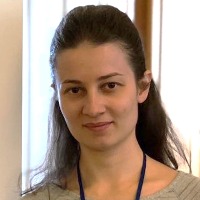
 

Uliana Zabolotna, project manager
This email address is being protected from spambots. You need JavaScript enabled to view it.

NaUKMA Center for Security and Social Studies

© 2022-2026 Національний університет «Києво-Могилянська академія»


вул. Сковороди 2, Київ 04070, Україна
тел.: 425-60-59, факс.: 463-67-83
e-mail: vkd@ukma.edu.ua